Schlagwort-Archiv: Tigray

The Sacralisation of Hatred: Religious Figures‘ Role During the Tigray War

Woldegiorgis G. Teklay


27 May 2026,18:00 CET (registration see below)

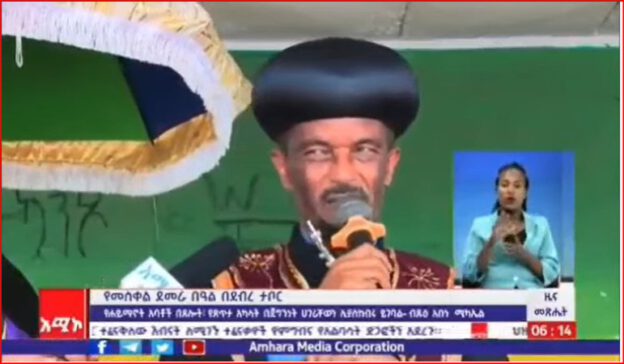
This presentation explores how clergy across major faiths, with particular emphasis on members of the Orthodox Church, employed hate speech and harnessed theological authority and sacred narratives to legitimise the federal government’s war efforts by analysing publicly stated statements and sermons that framed the conflict in moral and apocalyptic terms. The presentation forms part of ongoing PhD research and draws its data from mainstream media, as amplified by social media, through integrated qualitative methods and digital ethnography.During the height of the Tigray War in Ethiopia (2020–2022), hate speech functioned simultaneously as a linguistic practice, a narrative construction, an institutional strategy, and a digitally mediated social action. It circulated widely across political speeches, parliamentary sessions, cabinet declarations, religious sermons, broadcast media, and social media platforms, producing material consequences such as social polarisation, moral exclusion, and the legitimisation of violence. Prominent religious figures from diverse denominations publicly supported the war campaigns and portrayed the opposing side using dehumanising terms such as ‘evil’, ‘setan’, and ‘monsters’. Theologically, hate is opposed to beauty and is considered aesthetically evil. It functions as a rejection of the divine image inherent in every person and distorts the intrinsic unity between beauty, truth, and goodness. This distortion manifests through reductionist caricatures and the idolisation of false beauty, which together erode the capacity to recognise others as bearers of divine glory, contradicting the teachings of the perpetrators. Such speech acts fracture interpersonal bonds and disrupt covenantal relationships with the divine, contributing to a broader spiritual blindness that impairs moral perception and communal harmony. In the context of war, as observed in Ethiopia, the weaponization of hate by the religious figures was part of the mobilisation, legitimisation and justification of mass violence against targeted group/s.

Woldegiorgis G. Teklay is a PhD candidate in media anthropology at the Institute of Social and Cultural Anthropology at Ludwig Maximilian University of Munich, Germany. He was educated in journalism and communications (MA, BA) in Ethiopia, taught journalism courses at Mekelle University, and has been practising journalism since 2017, both in Ethiopia and in exile.

Registration by Email
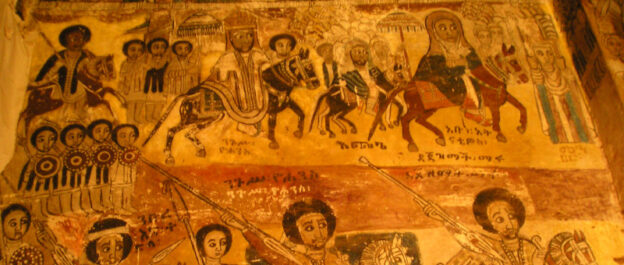
Painting from Tigray

State and society in local Tigrinya language practice – how culture resists

Wolbert G.C. Smidt

12. December 2023,18:00 CET

This talk focuses on local language practices, in contrast to official discourses on language and established understandings of vocabulary. In language practice, understanding of words are to some degree highly fluid and situational – according to political context, local experiences of success or suffering, cultural norms regarding the self-organisation of society, networking, negotiations of chances and mutual relations, and of historical memory shape the use of words. This includes local traditions of resistance against power, from a very local to the state level. This talk will focus on Tigrinya practice in the urban and rural context in Tigray, not within institutional settings (which tend to be state-oriented), but in private conversations (which are reflecting daily practice fluctuating between trust for the state and ideas of local rights beyond the state). Vocabulary around concepts of „land“ (addi, hager) are discussed, such as concepts of „government“ (mengisti) and of „law“ (heggi), which are used in a particular way in local parlance, marked by centuries of strong local autonomy, challenges of survival and the periodical presence of state actors. The state, at least the modern one, appears rather as an outside force, from which one may need protection, against one needs to rebel, or to which one needs to submit or which provides chances to be used – while in all cases, language practice shows the domination of local views of life organisation, land use and law, where the state is not authoritative. In short: Local realities defy the illusions of a strong state.

Registration by email.

Interview: Krieg in Tigray

Der Ethnohistoriker Wolbert Smidt weist in seinem Spiegel-Interview auf kulturelle und demographische Faktoren hin, die bei der Analyse des Krieges in Tigray  wenig Beachtung finden. Dazu gehören die traditionelle Autonomie von Regionen wie Tigray und eine aufgeheizte gesellschaftliche Atmosphäre, in der ein Großteil der sehr jungen Bevölkerung Narrativen zuneigt, die „Schuldige“ benennen.
https://www.spiegel.de/politik/ausland/aethiopien-ethnologe-erklaert-buergerkrieg-a-6f0c8ee5-addc-420f-8d37-cb83c7f47f26

„Äthiopien spricht nicht mehr mit den Äthiopiern“.

Dazu auch der Hinweis auf ein Interview mit Wolbert Smidt im September 2020, in seinem Forschungsgebiet in Tigray. Zur anwachsende politischen Krise sagte er:
https://deutsch-aethiopischer-verein.de/artikel-1/articles/interview-wolber-smidt.htm


Dazu auch ein Artikel über Beschädigungen und Zerstörungen kultureller Denkmäler in Tigray https://news.yahoo.com/no-more-sacred-places-heritage-054549797.html