Schlagwort-Archiv: Vortrag26

The Sacralisation of Hatred: Religious Figures‘ Role During the Tigray War

Woldegiorgis G. Teklay


27 May 2026,18:00 CET (registration see below)

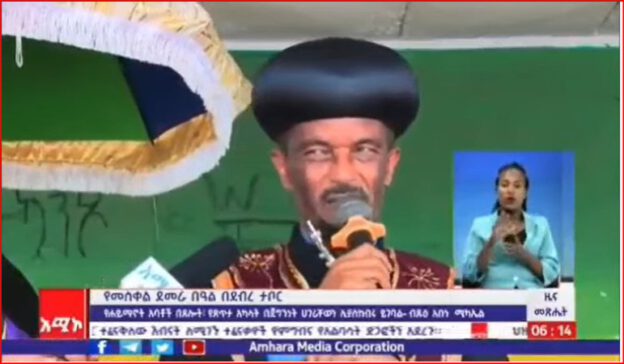
This presentation explores how clergy across major faiths, with particular emphasis on members of the Orthodox Church, employed hate speech and harnessed theological authority and sacred narratives to legitimise the federal government’s war efforts by analysing publicly stated statements and sermons that framed the conflict in moral and apocalyptic terms. The presentation forms part of ongoing PhD research and draws its data from mainstream media, as amplified by social media, through integrated qualitative methods and digital ethnography.During the height of the Tigray War in Ethiopia (2020–2022), hate speech functioned simultaneously as a linguistic practice, a narrative construction, an institutional strategy, and a digitally mediated social action. It circulated widely across political speeches, parliamentary sessions, cabinet declarations, religious sermons, broadcast media, and social media platforms, producing material consequences such as social polarisation, moral exclusion, and the legitimisation of violence. Prominent religious figures from diverse denominations publicly supported the war campaigns and portrayed the opposing side using dehumanising terms such as ‘evil’, ‘setan’, and ‘monsters’. Theologically, hate is opposed to beauty and is considered aesthetically evil. It functions as a rejection of the divine image inherent in every person and distorts the intrinsic unity between beauty, truth, and goodness. This distortion manifests through reductionist caricatures and the idolisation of false beauty, which together erode the capacity to recognise others as bearers of divine glory, contradicting the teachings of the perpetrators. Such speech acts fracture interpersonal bonds and disrupt covenantal relationships with the divine, contributing to a broader spiritual blindness that impairs moral perception and communal harmony. In the context of war, as observed in Ethiopia, the weaponization of hate by the religious figures was part of the mobilisation, legitimisation and justification of mass violence against targeted group/s.

Woldegiorgis G. Teklay is a PhD candidate in media anthropology at the Institute of Social and Cultural Anthropology at Ludwig Maximilian University of Munich, Germany. He was educated in journalism and communications (MA, BA) in Ethiopia, taught journalism courses at Mekelle University, and has been practising journalism since 2017, both in Ethiopia and in exile.

Registration by Email
African Archaeology: The example of Sudan

Ahmed Hussein Abdelrahman Adam

06 May 2026,18:00 CET (registration see below)

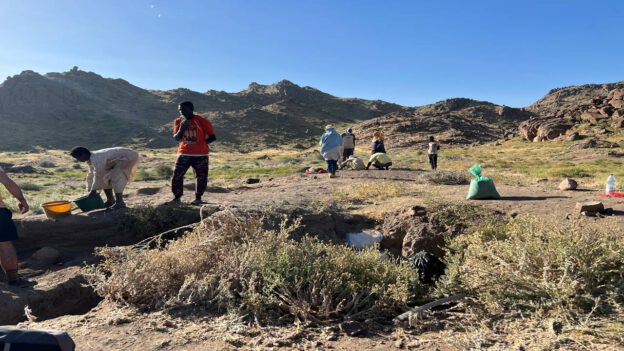
This lecture examines African archaeology through the long-term archaeological record of Sudan, highlighting its significance for understanding cultural development and regional interaction. From prehistoric periods (at sites such as Jebel Moya) to the kingdoms of Kerma, Kush, (Napata, and Meroe), evidence demonstrates early human occupation, advanced lithic industries, early pottery production, and developments in agriculture, including sorghum cultivation. The emergence of complex societies reflects processes of state formation, urbanism, and socio-political organization. Situated along the Nile and Red Sea networks, Sudan participated in long-distance exchange systems linking Africa with neighboring regions. Its archaeological record provides valuable insights into technological development, economic organization, and cultural practices within diverse environmental contexts. Overall, Sudan offers an important case study for examining long-term continuity and interaction in Africa as seem through archaeology.

Ahmed Hussein Abdelrahman Adam is Associate professor of archaeology at the University of Khartoum, Sudan. From October 2024 – Present: he is visiting researcher, FTS (eume). He has published in national, regional and international magazines, besides participating in regional and international conferences.

Registration by Email

Speaking for Nagaa: Navigating Free expressions in Oromo Linguistic and Cultural Spaces

Gemechu Bekele Lemu

12 February 2026,18:00 CET (registration see below)

Anthropology has traditionally overlooked freedom of expression as a subject of study. Recent pioneering studies propose a comparative lens to reposition freedom of expression within broader historical and cross-cultural frameworks. However, such studies often retain the Western liberal conception of freedom of speech as their primary reference point, perpetuating an ethnocentric view that marginalizes non-Western democratic cultures. Consequently, alternative views within African indigenous democracies like the Oromo Gada system remain unexplored.

This study examines how free expression is lived and practiced among the Oromo by situating it within the Gada system. It explores their linguistic and socio-cultural world through Oromo proverbs (mammaaksaa) and insights from sages (Hayyuu/Jaarsa argaa-dhageettii), using techniques of ethnography of speaking and anthropological-philosophical approach based on qualitative in-depth interviews. 

Preliminary findings indicate the Oromo conceptualize free expression as a right and necessity to express ideas and feelings without fear, but within the bounds of custom-law (Aadaa-seera) and moral codes (Safuu). Free expression is realized through speech (dubbii), poetry (weedduu), and symbolic acts, serving as an instrument to protect peace (Nagaa) and harmony with oneself, others, nature and the Creator (Uumaa). This priority of peace is echoed also in Oromo proverbs. The proverb “mara hincarrisani, mara hincallisani” (“Not everything is spoken, not everything is kept silent”) captures this balance, valuing both speech restraint and speaking truth that is directed toward achieving holistic peace. This ongoing work adopts a decolonial perspective to challenge the coloniality of power that marginalizes indigenous knowledge system and practices regarding freedom of expressions.  By centering Oromo proverbs and the insights of Oromo sages, the study is expected to enrich the comparative anthropological analysis of freedom of expression with new epistemic and ethical insights. 

Gemechu Bekele Lemu is a doctoral candidate at the Institute of Social and Cultural Anthropology, Ludwigs Maximilans University (LMU), Munich. He received his BA degree in Journalism and Communications from Addis Ababa University, Ethiopia, followed by a Master’s degree in International Media Studies in Bonn, Germany. Presently, his doctoral thesis investigates of free of expressions, offering a distinctive scholarly lens through examination of the linguistic and socio-cultural world of the Oromo.

Registration by Email